Somerton Dense: A Bold and Versatile Sans Serif for Modern Design
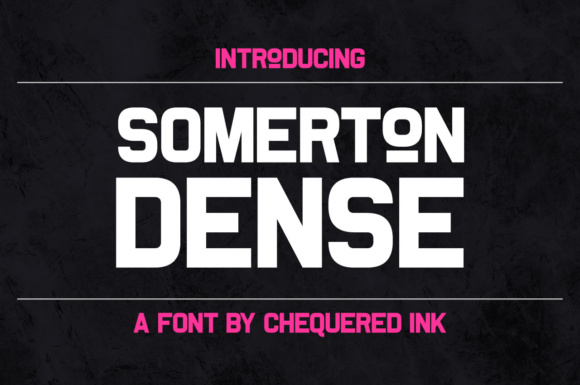
In the world of typography, few fonts command attention quite like Somerton Dense. This all-caps sans serif typeface, crafted by Chequered Ink, has become a go-to choice for designers seeking a strong, modern aesthetic. Its clean lines and bold presence make it ideal for a wide range of applications, from eye-catching posters to striking logos. Whether you're a designer, a business owner, or a creative professional, understanding the unique qualities of Somerton Dense can help you make informed typographic decisions.
The Characteristics of Somerton Dense
Somerton Dense is defined by its geometric structure and uniform weight distribution. Unlike traditional serif fonts that rely on small strokes and flourishes, this typeface uses a consistent stroke width throughout each letter. The result is a sleek, minimalist look that conveys clarity and professionalism. Because it is an all-caps font, it eliminates the visual distinction between uppercase and lowercase letters, creating a unified and powerful appearance.
One of the most notable features of Somerton Dense is its lack of serifs. This makes it particularly well-suited for digital media, where readability at smaller sizes is crucial. The absence of serifs also contributes to its modern feel, making it a popular choice for tech startups, branding projects, and contemporary design work. Its geometric shapes are not only visually appealing but also highly legible, even when used in large formats.
Practical Applications of Somerton Dense
The versatility of Somerton Dense makes it suitable for a variety of design contexts. One of the most common uses is in signage and display typography. Its bold, uniform style ensures that text remains visible and readable from a distance, making it ideal for storefronts, event banners, and public announcements. When used in these settings, the font’s strong presence helps convey messages with clarity and impact.
Another key application is in logo design. Many brands choose Somerton Dense for its ability to project confidence and authority. Its all-caps format gives logos a clean, sophisticated look that can be easily recognized across different mediums. For example, a tech company might use Somerton Dense to create a logo that feels both innovative and trustworthy. Similarly, a fashion brand could leverage its modern aesthetic to establish a distinct visual identity.
Advantages of Using Somerton Dense
There are several advantages to incorporating Somerton Dense into your design projects. First and foremost is its readability. Despite its bold and geometric nature, the font maintains a high level of legibility, especially in larger sizes. This makes it a great option for headlines, titles, and other prominent text elements.
Additionally, the font’s simplicity allows it to pair well with other typefaces. It can serve as a strong complement to more intricate or decorative fonts, providing balance and contrast. For instance, a designer might use Somerton Dense for a headline while pairing it with a script font for a tagline, creating a dynamic and cohesive visual hierarchy.
Another benefit is its adaptability across different platforms. Whether used in print or digital formats, Somerton Dense retains its sharpness and clarity. This makes it a reliable choice for designers who need a font that performs consistently in various environments. Its scalability ensures that it looks good at any size, from a small icon to a massive billboard.
Considerations for Effective Use
While Somerton Dense is a powerful tool, it is important to use it thoughtfully. One consideration is the context in which it is applied. Because it is an all-caps font, it may not be the best choice for long blocks of text. In such cases, it can appear overwhelming or difficult to read. Instead, it is more effective when used for short phrases, headings, or emphasis.
Another factor to consider is the tone of the design. While the font exudes strength and modernity, it may not be appropriate for every project. For example, a vintage-themed website or a formal document might benefit more from a serif or traditional sans serif font. Understanding the emotional and stylistic implications of typography is essential for creating designs that resonate with the intended audience.
Finally, it is worth noting that the font’s popularity means it may be widely used in certain industries. While this can be an advantage in terms of recognition, it also means that designers should be mindful of how their work stands out. Experimenting with spacing, color, and layout can help differentiate a design while still leveraging the strengths of Somerton Dense.
Real-World Examples and Observations
Looking at real-world examples can provide insight into how Somerton Dense is being used today. In the realm of advertising, many campaigns have adopted the font to create a sense of urgency and clarity. For instance, a sports brand might use it in a promotional poster to emphasize energy and movement. The font’s boldness aligns well with the high-energy nature of such campaigns.
In the field of user interface (UI) design, Somerton Dense has found a place in app interfaces and website headers. Its clean, modern look fits well within the aesthetic of contemporary digital products. Designers often use it for navigation menus, call-to-action buttons, and other interactive elements, where clarity and impact are essential.
Additionally, educational institutions have begun to incorporate Somerton Dense into their branding materials. Its professional appearance makes it suitable for logos, brochures, and academic publications. By using this font, schools and universities can project a sense of innovation and forward-thinking vision.
Conclusion
Somerton Dense is more than just a stylish font—it is a functional and versatile tool that can enhance a wide range of design projects. Its bold, all-caps structure, combined with its clean and modern aesthetic, makes it an excellent choice for logos, posters, and digital interfaces. By understanding its characteristics, advantages, and considerations, designers can make informed decisions about when and how to use it effectively.